The Seven Realms of Paatal Lok: A Complete Guide to the Underworld in Hindu Tradition
Most people in India know the word Paatal from a phrase. We say someone has gone to rasatal when they are ruined, we say a well is so deep it reaches paatal, and a recent crime drama borrowed the name for its three layers of the world: heaven, earth and the underworld. But in the old texts Paatal Lok is not one place. It is a set of seven realms stacked beneath the earth, each with its own ruler, its own people and its own kind of wealth. This guide walks down through all seven, in the order given by the Bhagavata Purana, and explains where the picture comes from.
Not a hell, but a country of palaces
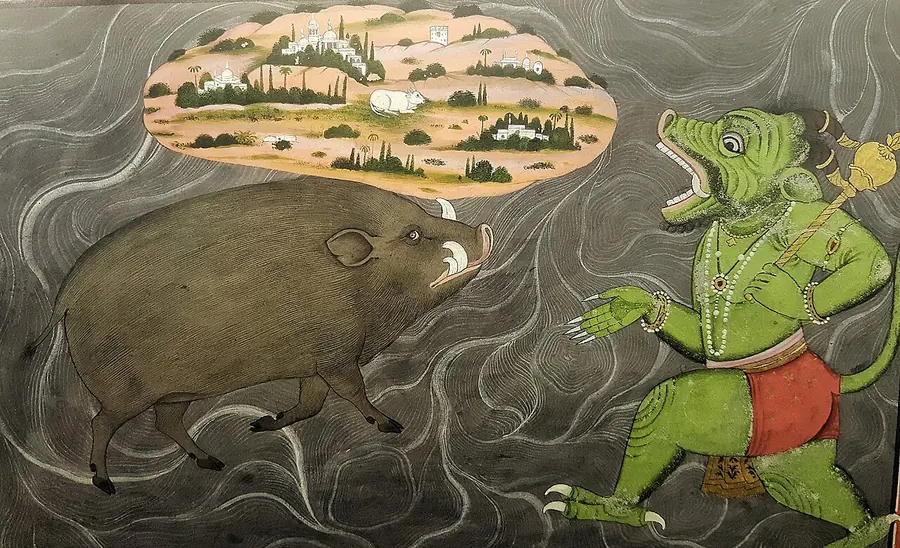
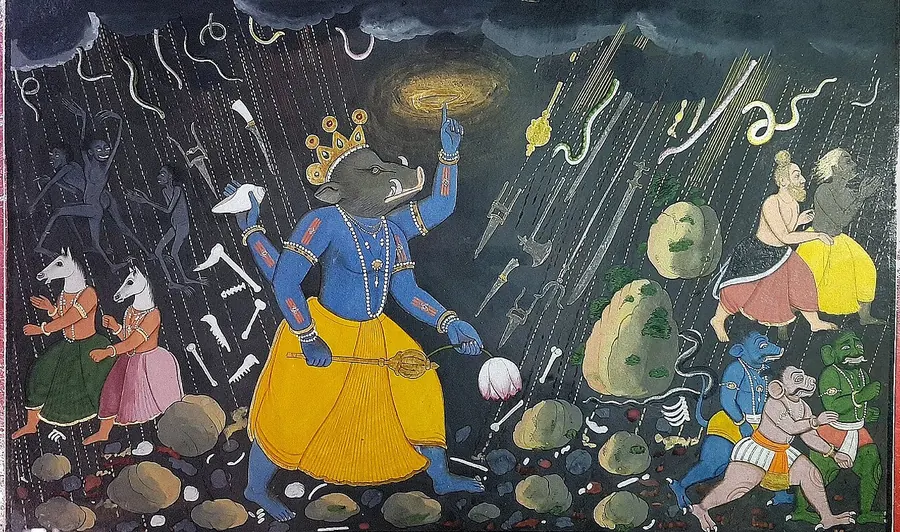
The first thing to know is that the seven realms are not a place of punishment. In Hindu cosmology the punishments after death belong to Naraka, which the Bhagavata Purana describes separately, in its own chapter. The seven lower worlds are called the bila-svargas, which can be translated as the heavens within holes or the heavens underground. They are lit, rich and crowded. The Puranas speak of palaces, gardens, rivers and cities, inhabited by Daityas, Danavas, Yakshas and Nagas, the serpent people, who live there in comfort.
The Vishnu Purana, in its second book, says that the great sage Narada, after visiting these realms, told the gods that Paatal was more delightful than heaven itself. It describes jewelled ground in seven colours, white, black, purple, yellow, sandy, stony and golden, one for each realm, and a light that comes not from a sun but from the gems on the hoods of the serpents. That image, of a world without a sun that still glitters, is the one that stays with most readers.
Seven below, seven above
The seven realms below have a counterpart above. Hindu cosmology also counts seven upper worlds, Bhu, Bhuvah, Svah, Mahah, Janah, Tapah and Satyam, running from the earth up to the abode of Brahma. Together they make the fourteen lokas. Paatal Lok is therefore best read as the lower half of a single ordered universe, not as a separate dark kingdom. When the popular phrase says swarg lok, dhartilok and paatal lok, it is squeezing that larger scheme into three steps.
The seven realms in order
The order below follows the Bhagavata Purana, Canto 5, chapter 24. The Vishnu Purana lists the same idea with different names and in a different sequence, so different books will not always agree. That is normal for the Puranas, which grew over many centuries.
1. Atala
Atala is the highest of the seven. Its ruler is Bala, a son of the great architect Maya, who is said to have created ninety-six kinds of illusion. Some of those illusions are still used by people who want to deceive. The Bhagavata says that Bala once created three kinds of women, and that a man who visits Atala is given an intoxicating drink and a herbal preparation that makes him feel as strong as ten thousand elephants. It is the first of the underground heavens, and it is full of luxury and show.
2. Vitala
Below Atala is Vitala, ruled by Shiva in the form of Hatakeshvara, the lord of gold, who lives there with Bhavani and his attendants. A river called Hataki flows through Vitala, and the fire god Agni drinks from it and gives back gold, called hataka, which the residents wear as ornaments. There is a living echo of this name in Gujarat: the Hatkeshwar Mahadev temple at Vadnagar is dedicated to Shiva in this form.
3. Sutala
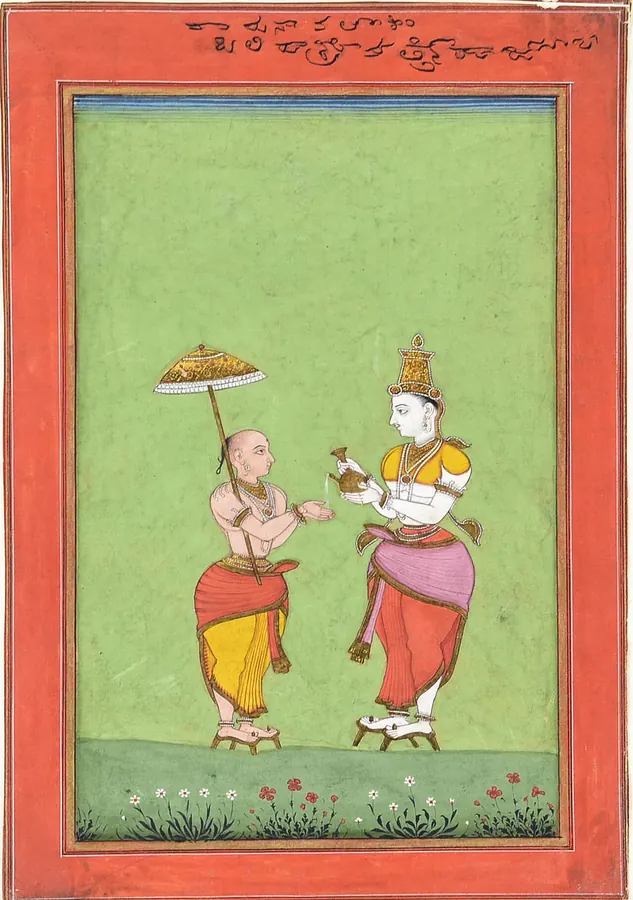
Sutala is the realm of King Bali, one of the most loved figures in the whole of Indian tradition. Bali was a generous asura king who had conquered the three worlds. When Vishnu came to him as the dwarf Vamana and asked for just three steps of land, Bali agreed, even though his teacher warned him. Vishnu grew until two strides covered the earth and the sky, and Bali offered his own head for the third. Pleased by his honesty, Vishnu sent him to rule Sutala, a palace realm built by Vishvakarma, and promised to guard his gate. Onam in Kerala remembers the day Bali is allowed to visit his people each year.
4. Talatala
Talatala belongs to Maya, the architect of the asuras. Maya built Tripura, three flying cities of gold, silver and iron, and they were destroyed by a single arrow of Shiva. Afterwards Shiva gave Maya this realm and his protection. Maya also appears in the Mahabharata, where he builds the splendid hall of the Pandavas at Indraprastha, and in the Ramayana, where his daughter Mandodari becomes the queen of Ravana.
5. Mahatala
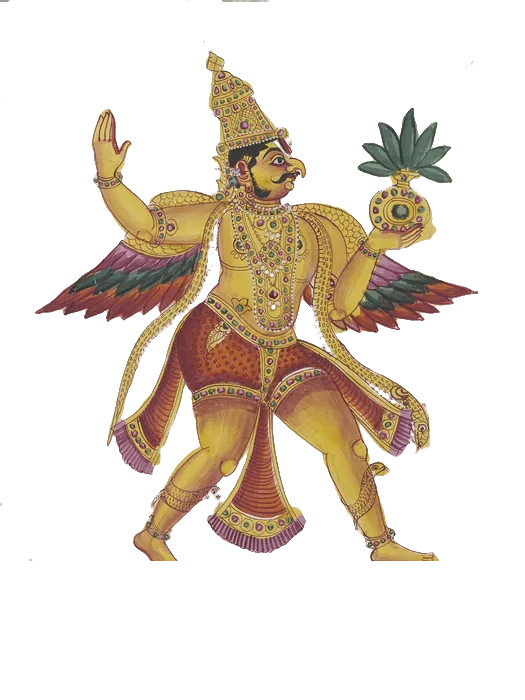
Mahatala is the home of the many-hooded Nagas descended from Kadru, among them Kuhaka, Takshaka, Kaliya and Sushena. They enjoy every pleasure, the Bhagavata says, but they cannot relax, because they live in fear of Garuda, the eagle who is the vehicle of Vishnu. That fear has an old cause. Kadru and her sister Vinata, Garuda's mother, once made a wager over the colour of the tail of a divine horse, and Kadru won by a trick. Vinata became her servant, and Garuda never forgave the serpents.
6. Rasatala
Rasatala is the realm of the Daityas and Danavas, the sons of Diti and Danu, who are strong and are forever at war with the gods. They live in holes like snakes and are afraid of Sarama, the dog of Indra, who in the Rigveda finds the cows that the Panis had hidden. The name has a long afterlife in Hindi: to go to rasatal, rasatal mein jana, is to be completely ruined.
7. Patala
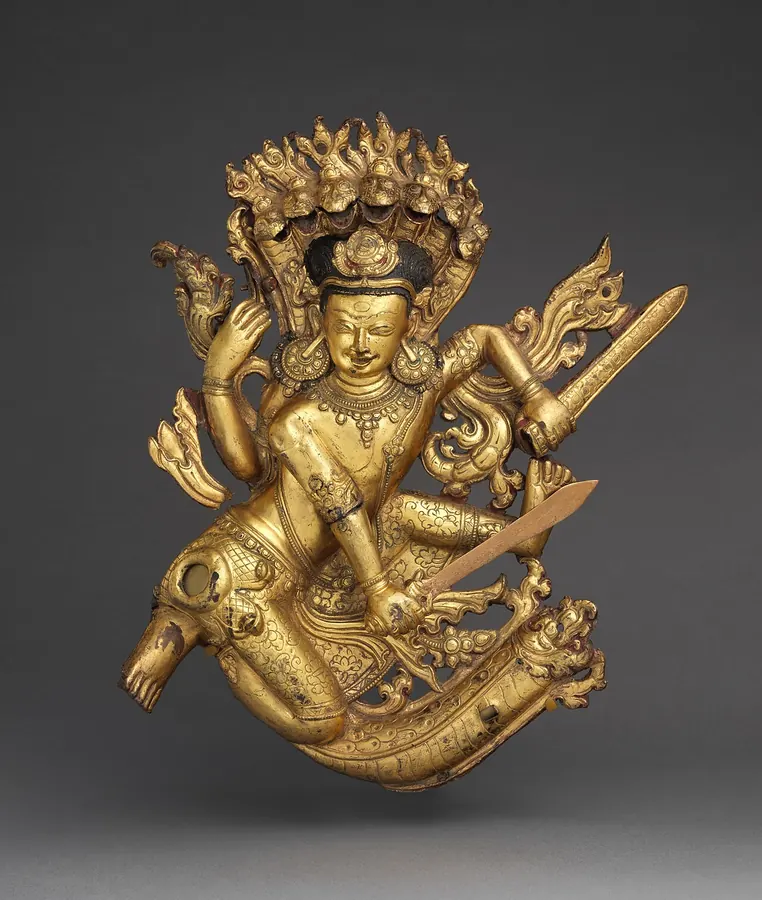
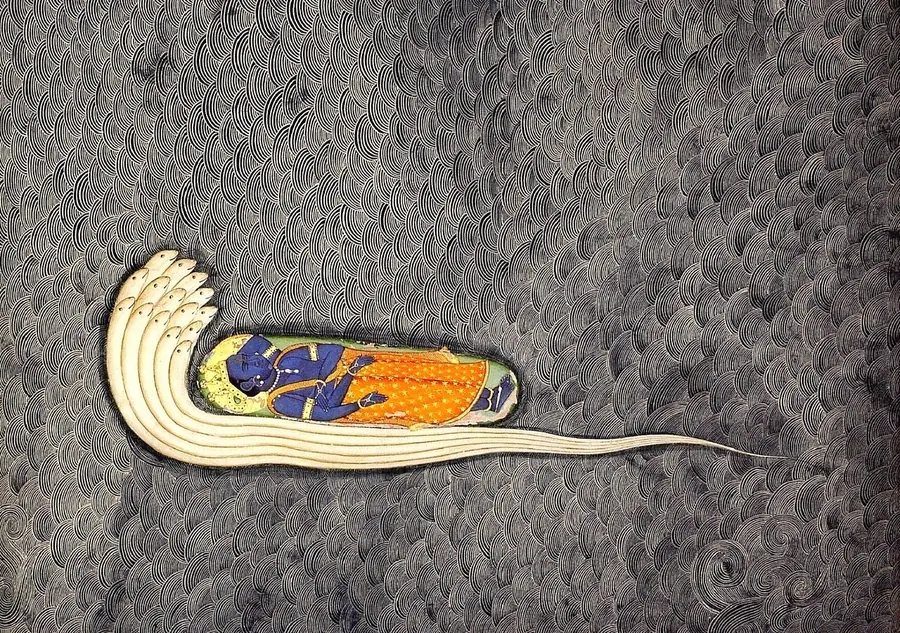
Patala, the lowest of the seven, is also called Nagaloka. Its king is Vasuki, with other serpent kings, who have five, seven, ten, a hundred or a thousand hoods. There is no sun here. Each hood carries a jewel, and their light fills the dark. Vasuki is the serpent coiled around the neck of Shiva, and the rope with which gods and demons churned the ocean of milk. Below Patala there is only one being, Shesha, the thousand-headed serpent who holds up all the worlds.
Why the stories matter today
These are not only old tales. They explain festivals, place names, proverbs and temple traditions that are still alive. Onam, Bali Pratipada, Nag Panchami and the Hatkeshwar temple in Vadnagar all come out of the picture described above. In Hindi and in many other Indian languages, a depth image from this tradition, rasatal, is a common word. Knowing the seven realms is a small key to a great deal of Indian culture.
There is also a useful lesson hidden in the way the realms are arranged. The deeper you go, the more ancient and powerful the beings are, and the less the visitors from above know about them. The realms are ordered by distance from the surface, not by virtue. That is why we chose them as the map for Paatal, the daily trivia game. In the game, the more common an answer is, the nearer the surface it stays. A rare answer that few people know takes you down, realm by realm, until the deepest answers reach Patala.
How to read the sources
If you want to go further, read the Bhagavata Purana, Canto 5, chapters 24 and 25, which describe the realms and Shesha, and Book 2, chapter 5 of the Vishnu Purana for a different list. Translations are available free online. Where two books disagree, as they do on the names of the lower realms, it is honest to say that Hindu tradition holds more than one account, and our own descriptions on the realm pages follow the Bhagavata Purana.
The seven at a glance
- Atala: Bala, son of Maya, master of illusion.
- Vitala: Shiva as Hatakeshvara, lord of gold, and the Hataki river.
- Sutala: King Bali, protected by Vishnu.
- Talatala: Maya, the architect of the asuras.
- Mahatala: the many-hooded Nagas descended from Kadru.
- Rasatala: the Daityas and Danavas, and the dread of Sarama.
- Patala: Vasuki and the serpent kings, with Shesha beneath.
Each of these realms has its own page on Paatal, and several have their own longer article on this blog. If you would like to see how deep your own knowledge goes, today's quiz is waiting, and the rarer your answer, the further down it takes you.
Sources
- Bhagavata Purana, Canto 5, chapters 24 and 25 (the seven lower worlds and Shesha).
- Vishnu Purana, Book 2, chapter 5 (the seven lower worlds, ordered differently).
- Wikipedia, "Patala" and "Naga", for a modern summary of the same passages.
Found a mistake? Please tell us at our contact page and we will correct the article and note the change.
Keep reading
King Bali and Sutala: The Generous Asura Who Gave Three Steps of Land
The story of Bali, the asura king who lost the three worlds to Vishnu as Vamana, was sent to rule the realm of Sutala, and is welcomed back every year at Onam and on Bali Pratipada.
Mahatala and the Serpents of Kadru: A Wager, a Curse and the Eagle Who Hunts Snakes
How a bet between two sisters, Kadru and Vinata, made the Nagas the enemies of Garuda, and what the Mahabharata tells us about Takshaka, Kaliya and the serpents of the fifth realm of Paatal Lok.
Maya, the Architect of the Asuras: Tripura, the Pandavas' Hall and the Realm of Talatala
Maya Danava, the great builder of Indian epics, built the flying cities of Tripura and the hall of the Pandavas at Indraprastha, and rules Talatala, the fourth realm of Paatal Lok.