Mahatala and the Serpents of Kadru: A Wager, a Curse and the Eagle Who Hunts Snakes
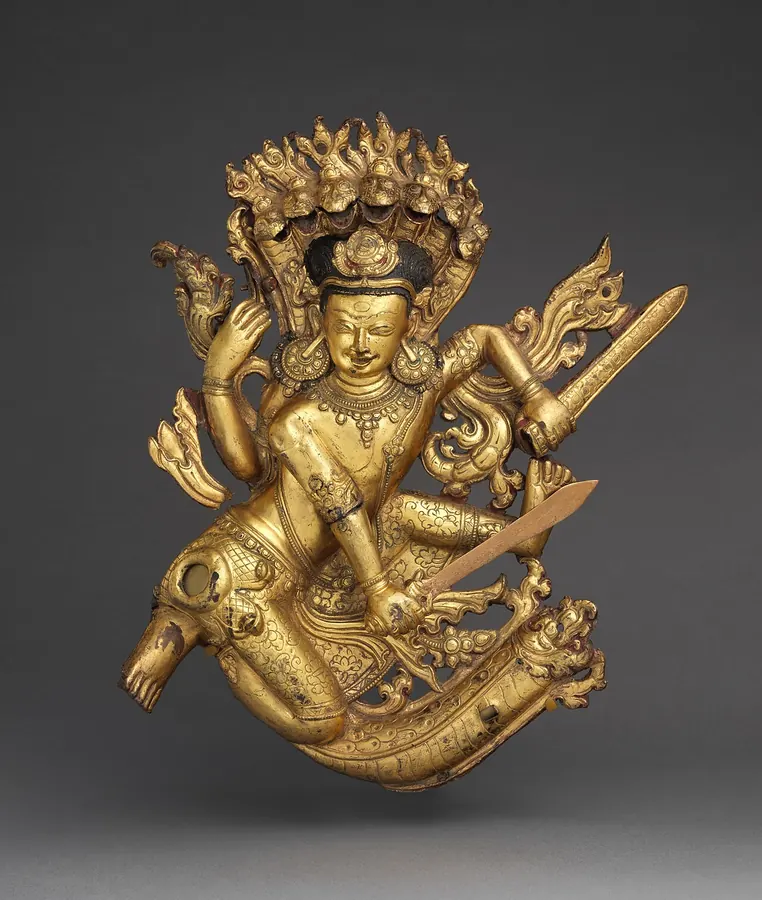
The fifth realm of Paatal Lok, Mahatala, is home to the many-hooded serpents who are descended from Kadru. The Bhagavata Purana names a few of them: Kuhaka, Takshaka, Kaliya and Sushena. They live in great comfort but they cannot relax, because they fear Garuda, the eagle who is the vehicle of Vishnu. Why does the eagle hunt the snakes? The answer is a family quarrel, and it starts with a bet between two sisters.
Two sisters and a horse
The sage Kashyapa had many wives, and two of them were Kadru and Vinata, the daughters of Daksha. Kadru asked for a thousand serpent sons, and Vinata asked for just two sons who would be stronger than all of Kadru's. Kashyapa granted both wishes. Kadru laid a thousand eggs, and Vinata two. After five hundred years, Kadru's eggs hatched and the Nagas were born. Vinata's eggs had not hatched, and in her impatience she broke one open. The son inside, Aruna, was not fully formed. He became the charioteer of the sun, and he cursed his mother that she would become a servant for five hundred years, unless her second son, who was still in the egg, freed her.
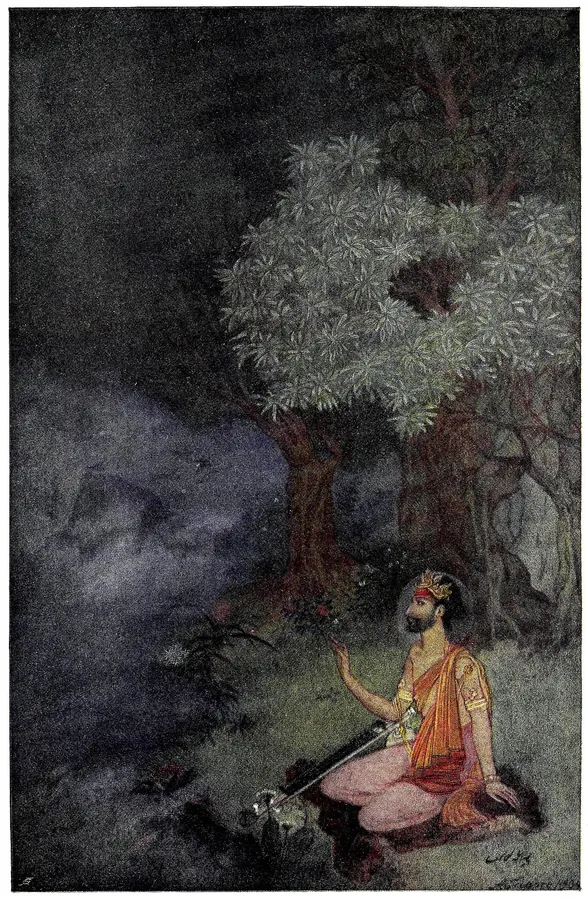
One day the two sisters saw the divine horse Uchchaihshravas, which had risen from the churning of the ocean, and they began to argue about the colour of its tail. Vinata said it was entirely white. Kadru said that it had a black tail. They made a bet: whoever was wrong would become the servant of the other.
The trick
Kadru knew that the tail was white. But she told her sons, the serpents, to hang on the horse's tail like black hairs, so that it would look black. Some of the serpents refused to take part in the deception, and Kadru cursed them to be burned in a great snake sacrifice. The others agreed and did what she said. When the sisters went to look at the horse, the tail seemed black, and Vinata lost the bet. She became Kadru's slave.
This is the source of the great enmity between birds and snakes in Indian tradition. It is also the reason why, in the Puranas, the serpents' guilt is a theme: they were not simply wicked, they were part of a lie.
Garuda frees his mother
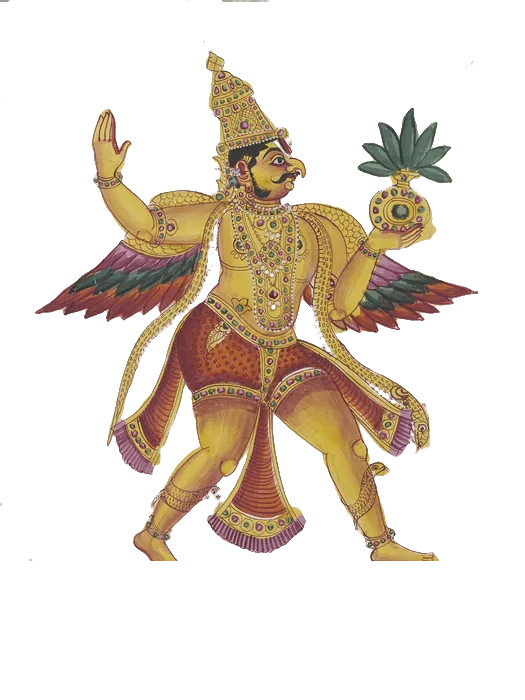
Vinata's second egg then hatched, and her son Garuda came out, as large as a mountain and shining like fire. When he learned that his mother was a slave to Kadru and her serpents, he asked what he would need to do to free her. The serpents said they would release Vinata if he brought them amrita, the nectar of immortality, which was guarded by the gods.
Garuda fought his way through fire, whirling blades and fierce guardians to reach the amrita, and in the end he took it. On his way back, Vishnu, impressed by his strength and his refusal of the nectar for himself, offered him a boon. Garuda asked to be higher than Vishnu without being on his throne, and he became the banner on Vishnu's chariot and his mount. He also asked that the serpents become his food. Indra, who later retrieved the nectar when Garuda put it on the grass for the serpents to drink after bathing, had the same idea, and the serpents licked the grass, which is why, the story says, the tongues of snakes are forked.
Garuda had his mother freed, and he has been the enemy of snakes ever since. The Bhagavata Purana's description of the Nagas of Mahatala, who live with every luxury and cannot feel at ease, refers to this fear.
Takshaka and the snake sacrifice
One of the most important Nagas of Mahatala is Takshaka. In the Mahabharata he is the serpent who kills King Parikshit, the grandson of Arjuna, after a curse by a sage's son. Parikshit's son, Janamejaya, learned that Takshaka was responsible for his father's death and decided to destroy all snakes in a great sacrifice, a sarpa satra. The mantras of the priests pulled serpents from every part of the earth and the underworld, and they fell into the fire.
Takshaka fled to the realm of Indra and hid beneath his throne, but the priests' spells reached even there. At the last moment, a boy named Astika, who was half Naga and half human, arrived at the sacrifice and asked Janamejaya for a gift. The king offered him whatever he wished, and the boy asked that the sacrifice be stopped. Janamejaya was bound by his word, and Takshaka was saved. This episode, the Astika Parva, is one of the first stories in the Adi Parva of the Mahabharata.
Kaliya and the young Krishna
Another Naga named in the Bhagavata Purana for Mahatala is Kaliya, a many-headed serpent who once lived in the Yamuna river, near Vrindavan. Kaliya had been forced out of Ramanaka island by the fear of Garuda, but he found that Garuda could not go to a particular pool of the Yamuna, because of a curse by the sage Saubhari. He settled there, and his poison made the water deadly for cattle and herdsmen.
The child Krishna dived into the pool and fought Kaliya. He climbed onto the serpent's hoods and danced on them, pressing each one down until the serpent was exhausted. Kaliya's wives begged for his life, and Krishna spared him, but told him to leave the river for the sea. He told Kaliya that Garuda would no longer attack him, because the mark of Krishna's feet was now on his hoods. The scene of Krishna dancing on Kaliya is one of the most common images in Indian art, and in dance forms such as Bharatanatyam and Kathak.
The cast of Mahatala
- Kadru, the mother of the Nagas, who won the bet by a trick.
- Vinata, her sister, enslaved, and the mother of Garuda.
- Garuda, the eagle, enemy of the snakes and the mount of Vishnu.
- Takshaka, the killer of Parikshit, saved at the snake sacrifice by Astika.
- Kaliya, the serpent of the Yamuna, defeated by the child Krishna.
- Kuhaka and Sushena, two more of the named serpents of Mahatala.
A lesson about lies
The story of the two sisters is more than an origin tale. It is a story in which a small lie, told for the sake of a bet, creates an enmity that lasts through every age and across the whole world of the gods and demons. The serpents' fate is the result of the first deception, not of any natural evil. Some Naga sons refused to take part, and they too paid the price, because the curse fell on the innocent along with the guilty. This is a moral that the Mahabharata is fond of: the consequences of an act are not limited to those who did it.
In the Paatal game, Mahatala spans depths of 4,000 to 5,000 metres, where the answers are known to only a few. It is also the realm in which the rarest tiers begin to appear. Nagaraja, the Naga king, and Sheshanaga, the great serpent, are the names of the two tiers just below the Nagamani, and they are named after the beings who live here and below.
Sources
- Mahabharata, Adi Parva, the Astika Parva (Kadru, Vinata, Garuda and the snake sacrifice).
- Bhagavata Purana, Canto 5, chapter 24 (Mahatala), and Canto 10, chapters 15 and 16 (Kaliya).
- Wikipedia, "Kadru", "Vinata", "Garuda" and "Takshaka".
Found a mistake? Please tell us at our contact page and we will correct the article and note the change.
Keep reading
Maya, the Architect of the Asuras: Tripura, the Pandavas' Hall and the Realm of Talatala
Maya Danava, the great builder of Indian epics, built the flying cities of Tripura and the hall of the Pandavas at Indraprastha, and rules Talatala, the fourth realm of Paatal Lok.
Vasuki and the Churning of the Ocean: The Serpent King Who Became a Rope
The story of Samudra Manthan, in which gods and demons used the serpent king Vasuki as a rope to churn the ocean of milk, and what came out of it, from poison to the nectar of immortality.
Who Is Shesha? The Mythology Behind the Cosmic Serpent Who Holds Up the Worlds
Shesha, also called Ananta, is the thousand-headed serpent on whom Vishnu rests. What his name means, where he appears in the Puranas and epics, and why he is born again as Lakshmana and Balarama.