Maya, the Architect of the Asuras: Tripura, the Pandavas' Hall and the Realm of Talatala
Every culture has a figure who stands for the best builder in the world. In Greek myth it is Daedalus. In the Hindu tradition it is Maya. He belongs to the asuras, the rivals of the gods, but in the epics he works for both sides, and what he builds is among the most wonderful buildings in the whole of Indian literature. He is also the ruler of Talatala, the fourth of the seven realms of Paatal Lok. This article looks at the three things he is remembered for: a city that flew, a hall that fooled kings and a daughter who became a queen.
The architect of the asuras
Maya is called a Danava, one of the asuras. The word maya in Sanskrit means illusion or the power to create appearances, and the architect is said to have had mastery of it. The Puranas call him the author of a treatise on building, the Mayamata, and some of the tradition of South Indian temple architecture traces its rules to him. Whether or not he was the real author, the text exists, and it deals with the choice of site, the plan of a building and the measurements of the parts.
Tripura: the three flying cities
In the Bhagavata Purana, Canto 7, the gods are defeated by the asuras and ask Shiva for help. The asuras, led by Maya, had built three cities, called Tripura, the three cities, which flew through the sky. One was made of gold, one of silver and one of iron. Each city was so protected that it could be destroyed only if all three were aligned in a single line, which happened once in a thousand years, and only by a single arrow.
Shiva took the form of the destroyer of the three cities, Tripurantaka. The gods made him a chariot of the whole world, with the earth as the platform, the sun and moon as wheels, the Meru mountain as his bow and the serpent Vasuki as the bowstring. When the three cities aligned, Shiva released one arrow and burned them to ashes.
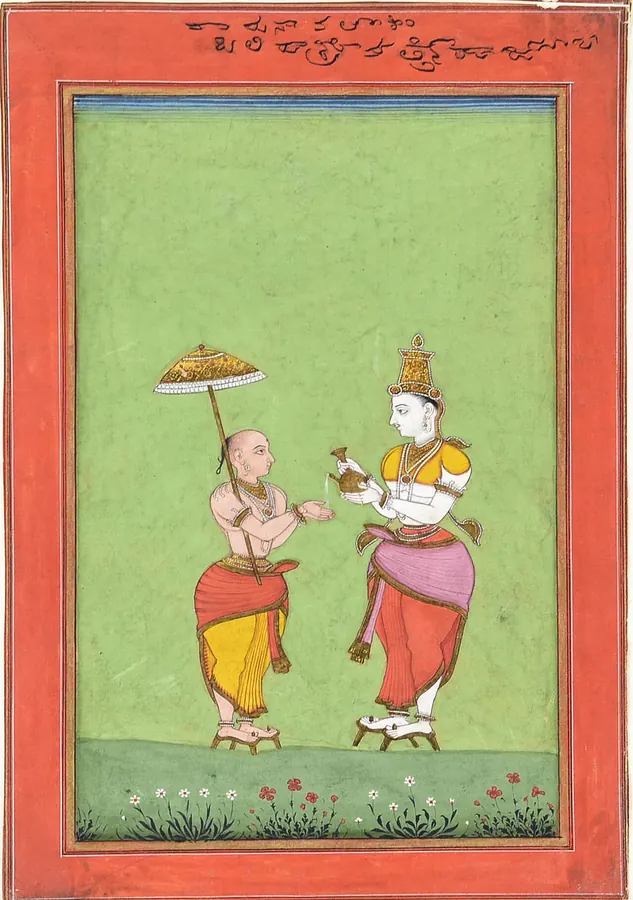
But the story does not end with a defeat. The Puranas say that Maya, who was a devotee of Shiva, was spared, because he had never been wicked. He was rescued from the fire, and, as the Bhagavata says, Shiva gave him the realm of Talatala and his own protection. Even the Sudarshana chakra of Vishnu, which cuts the enemies of the gods, is said not to trouble Maya. A craftsman is respected even by his enemies.
The hall at Indraprastha
The second famous work of Maya appears in the Mahabharata. After the Pandavas received the forest of Khandava, which was burned by Agni with Krishna's and Arjuna's help, Maya was saved from the fire by Arjuna. Out of gratitude, he offered to build something for the Pandavas. Krishna suggested a great assembly hall, a sabha, for Yudhishthira, who was about to become emperor.
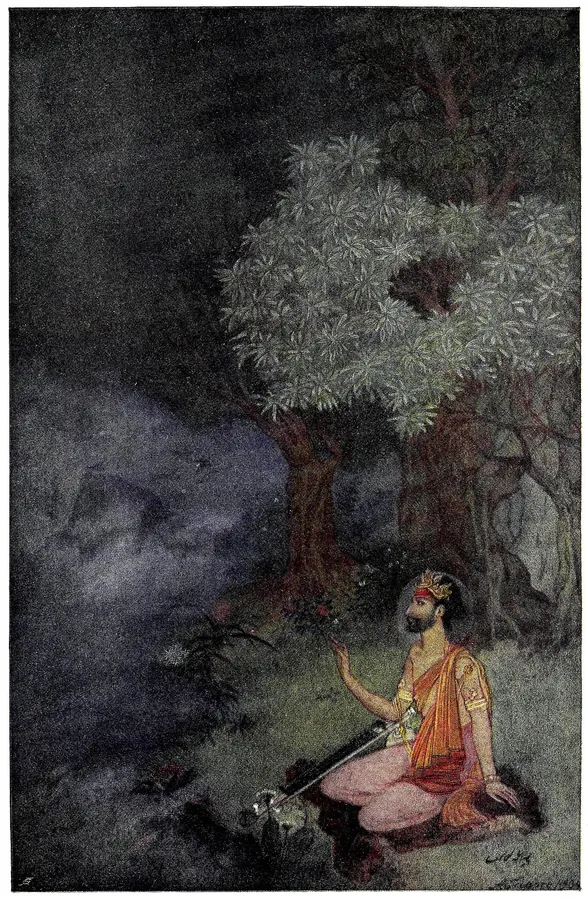
Maya built the Maya Sabha at Indraprastha, and it became one of the most famous buildings in the epic. It was filled with magical effects. The floor looked like water in places and like a smooth floor in others, and a lake looked like a floor. When Duryodhana, the Kaurava prince, visited the hall, he lifted his clothes to cross a place that was dry, and then stepped into a pool he thought was marble. He fell in. The Pandava brothers and their attendants laughed at him (popular tellings add Draupadi, though the old text does not name her). Duryodhana never forgave the insult, and this is often given as one of the causes of the dice game and the war that followed.
The story shows how Maya's gift cuts both ways. The same illusion that astonishes the guests also humiliates one of them, and a work of art becomes the seed of a war.
Mandodari and Ravana
Maya's third mark on the epics is his daughter. In the Ramayana, Mandodari is the wife of Ravana, the king of Lanka. She is described as beautiful, learned and wise, and she repeatedly advises Ravana to return Sita to Rama. In a number of traditions she is the daughter of Maya and the apsara Hema. Her relation to the great builder is a reminder that the asura world is not only a world of warriors but of artists and thinkers.
Talatala as a realm
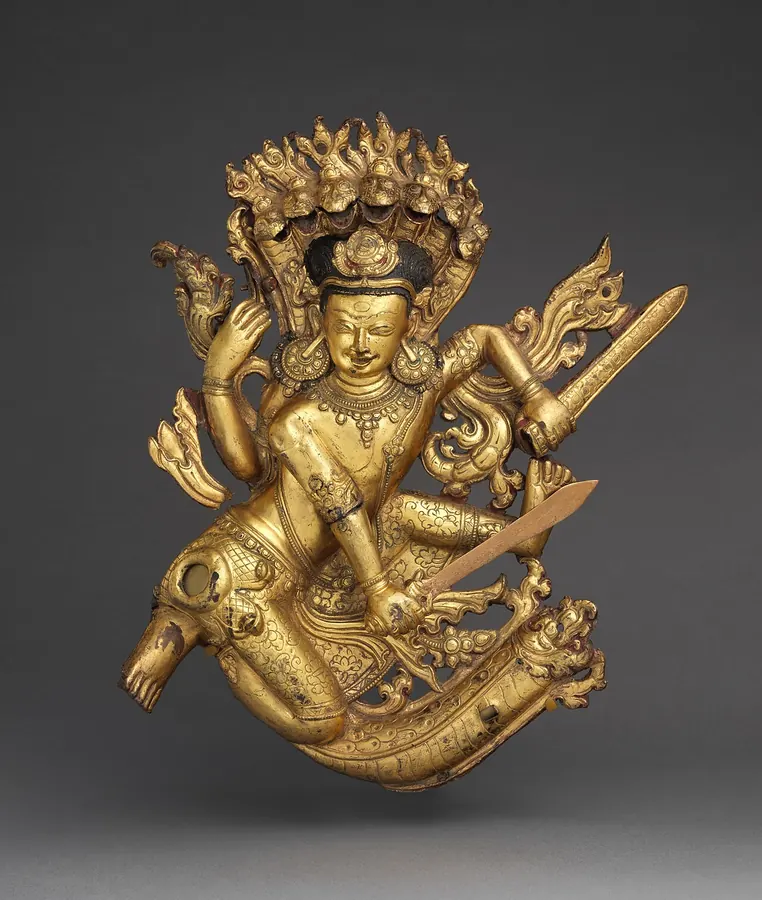
In the Bhagavata Purana, the realm of Talatala is fourth among the seven underground realms, below Sutala and above Mahatala. Maya rules it, and his realm is described as a place of wonders. His skill is not only in building but in the creation of magic. The realm is also a place of peace of a kind, because it is protected by Shiva, and the Puranas say that the Danavas who live there are not afraid of any of the gods.
Maya the author
Besides the stories, Maya is also remembered as a teacher. The Mayamata, a Sanskrit treatise on architecture and sculpture, is attributed to him, and it is still read and quoted in South India, where some families of traditional temple builders, the sthapatis, say that they follow its rules. Whether he wrote it or not, the book carries his name, and that tells us how the tradition thought of him: as the master of the art of building itself.
What the stories say about builders
The figure of Maya is surprising in one way. In the Puranas, the opponents of the gods are usually described as proud, violent or greedy. Maya is none of these. He is skilful, loyal, grateful and fair. He builds for those who ask, whether they are asuras or Pandavas, and he is remembered for what he built, not for which side he was on. The tradition seems to say that skill deserves respect whoever it serves.
If you would like to see how far down this story goes, the realm of Talatala spans depths of 3,000 to 4,000 metres in the Paatal game. A player who answers with something only a handful of people know goes through it on the way to Mahatala, the realm of the serpents.
Sources
- Bhagavata Purana, Canto 5, chapter 24 (Talatala), and Canto 7, chapter 10 (Tripura).
- Mahabharata, Sabha Parva (the building of the hall at Indraprastha).
- Valmiki Ramayana, Kishkindha and Uttara Kanda (Mandodari, daughter of Maya).
- Wikipedia, "Maya (Asura)" and "Tripura (Hindu mythology)".
Found a mistake? Please tell us at our contact page and we will correct the article and note the change.
Keep reading
Mahatala and the Serpents of Kadru: A Wager, a Curse and the Eagle Who Hunts Snakes
How a bet between two sisters, Kadru and Vinata, made the Nagas the enemies of Garuda, and what the Mahabharata tells us about Takshaka, Kaliya and the serpents of the fifth realm of Paatal Lok.
King Bali and Sutala: The Generous Asura Who Gave Three Steps of Land
The story of Bali, the asura king who lost the three worlds to Vishnu as Vamana, was sent to rule the realm of Sutala, and is welcomed back every year at Onam and on Bali Pratipada.
Rasatala: The Realm of the Daityas and Danavas, and Why We Say Someone Has Gone There
Who lives in Rasatala, the sixth realm of Paatal Lok: the Daityas, the Danavas, the Panis who hid the cows of Indra, and Sarama, the dog who found them. And how the name became a Hindi idiom for ruin.