Naga Worship in India: From Nag Panchami to the Sacred Groves of Kerala
India is one of the few cultures in the world where a creature that people are afraid of is also a creature they worship. In every part of the country, at one time of the year or another, people offer flowers, turmeric and milk to the serpent, and in some places the worship is a daily thing. This article looks at how and where the Naga is honoured, from the national festival of Nag Panchami to temples and groves that are much older than any written record.
Why snakes are worshipped
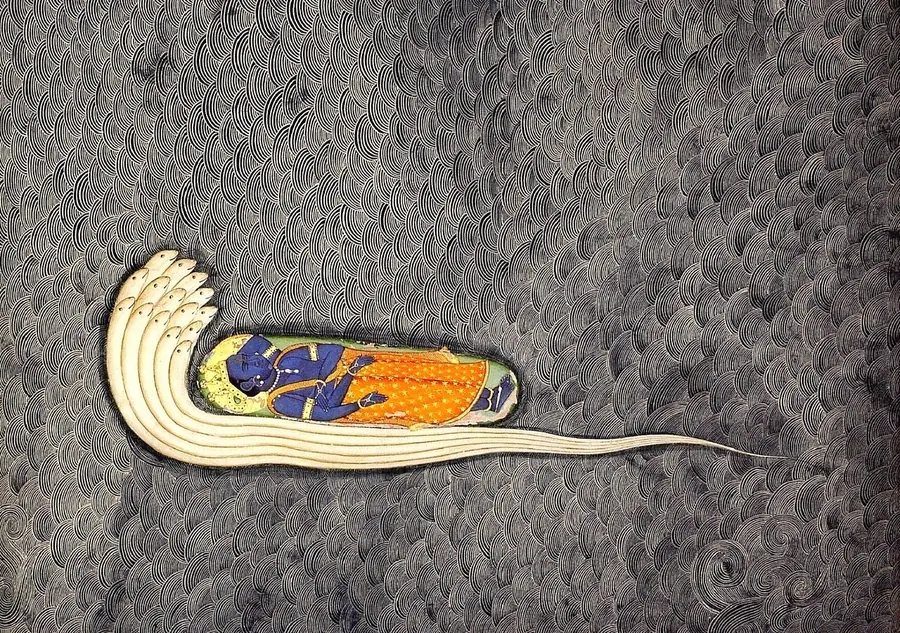
There are several reasons, and they overlap. Snakes are dangerous, and in a farming country where people walk barefoot through fields, a bite could be fatal, so respect is also a form of protection. Snakes also protect grain, because they eat the rats that destroy it. They live underground and appear from holes in the earth, so they were linked to water, fertility and the wealth hidden below the surface. They shed their skin, which made them a symbol of renewal. And they are powerful figures in the Puranas: Shesha holds up the world, Vasuki was the rope for the churning of the ocean, and the serpents of Paatal Lok guard hidden treasures.
Nag Panchami
The main festival is Nag Panchami, held on the fifth day, panchami, of the bright half of the month of Shravana, which falls in July or August. Families clean the house, draw pictures of serpents on the wall with cow dung, paint them with turmeric and vermilion, and make offerings of flowers, rice, and sweets. Many people fast. In some places, women go to an anthill, which is thought to be the home of the serpent, and pour milk and offer flowers there.
A modern note: snakes do not drink milk, and forcing a snake to take it can cause serious harm. Conservation groups in India ask worshippers to offer milk to a picture or a stone image of the serpent, and not to a live snake. Capturing snakes for display at the festival is illegal under the Wildlife (Protection) Act, 1972.
The festival is celebrated with local variations. In Maharashtra, there are processions and fairs, and in the village of Battis Shirala in Sangli district, the festival was famous for live cobra worship, which was banned by the courts. In Karnataka and Andhra Pradesh, there are rituals at snake temples. In West Bengal and Odisha, the same season has the worship of the goddess Manasa.
The sarpa kavus of Kerala
The state with the strongest tradition of serpent worship is Kerala. Many families, especially those of the Nair and Namboothiri communities, kept a small patch of forest, called a sarpa kavu or a snake grove, in the corner of their land. The grove was left untouched, with its trees and undergrowth, and in it were stone images of serpents, often under a tree. Offerings of turmeric, milk and flowers were made on special days, and a family that cut down the grove or disturbed the snakes was believed to suffer misfortune.
Whatever one thinks of the belief, the groves had a clear effect: they preserved small areas of forest, which sheltered snakes, birds, insects and plants in a landscape that was otherwise being cleared for farming. Ecologists have studied them as pockets of biodiversity.
Mannarasala
The best known serpent temple in Kerala is Mannarasala, near Haripad in Alappuzha district. It is a large forest sanctuary with tens of thousands of stone snake images. The temple has an unusual feature: the chief priest is a woman, the Valiyamma or Mannarasala Amma, who is drawn from the Namboothiri family that holds the temple. Couples without children visit the temple, and when a prayer is answered, they return to offer a bronze or stone snake figure and a turmeric paste.
Other serpent shrines
- Kukke Subramanya temple, in Dakshina Kannada in Karnataka, is a centre of Naga worship, where rituals are performed to remove the curse of the serpent, sarpa dosha.
- Nagaraja temple, in Nagercoil in Tamil Nadu, takes the name of the city from the deity. The main image is a five-headed serpent, and the floor of the temple is sand.
- Mopidevi, in Andhra Pradesh, a Subrahmanya temple known for the worship of serpents, where an anthill is honoured as the home of the serpent.
Manasa, the goddess of snakes
In Bengal, Assam, Bihar and Odisha, the serpent is worshipped as a goddess. Manasa, called the sister of Vasuki, protects against snakebite and brings fertility. The Manasamangal, a series of poems in Bengali from the late medieval period, tells the story of the merchant Chand Sadagar, who refused to worship her, and the sufferings that followed, until he gave in. The story is still sung and performed in village festivals.
Serpents in Buddhism and Jainism
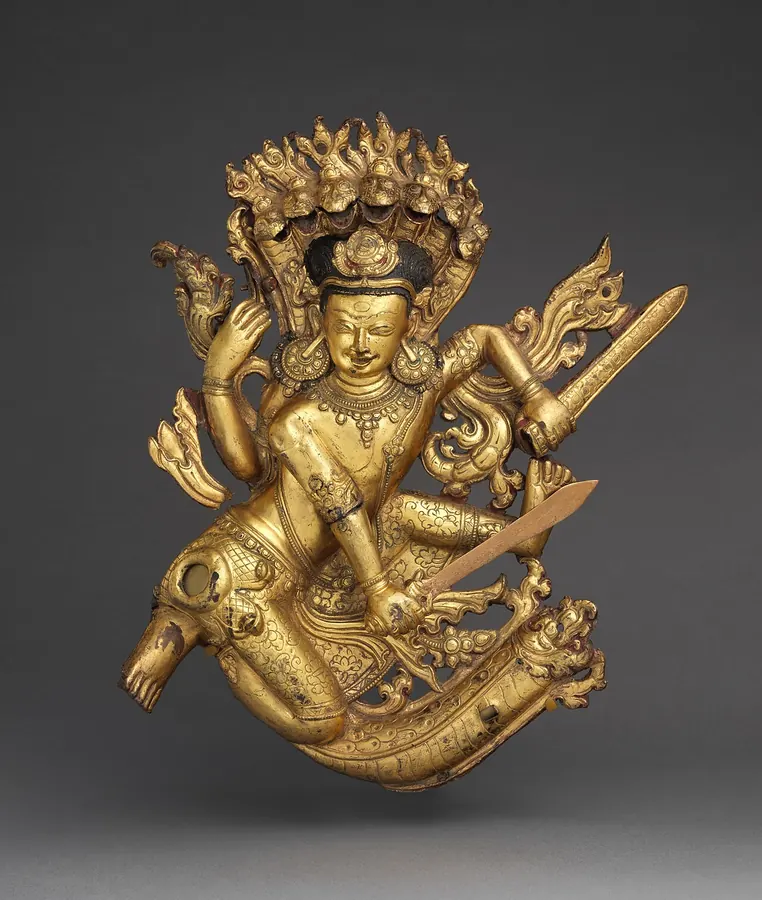
The serpent is not only a Hindu figure. In Buddhism, the story of Muchalinda tells of a king of Nagas who sheltered the Buddha with his hoods during a storm after his enlightenment, and the image of the Buddha under a serpent's hood is found in Southeast Asia, especially in Cambodia and Thailand. In Jainism, Parshvanatha, the twenty-third tirthankara, is always shown with a canopy of serpent hoods over his head, in memory of the serpent that protected him. In both traditions, the Naga is a guardian of the holy.
A name that is not a snake
A small note on names. The Naga people of Nagaland and Manipur are not named after serpents, and their traditions are not connected with serpent worship. The name Naga for these communities has a separate and disputed origin, and it is a mistake to link the two. Hindu serpent worship is a different tradition altogether.
What it tells us
Naga worship is a fine example of how a tradition can hold together fear, respect, ecology and story. It also helps explain the shape of the underworld in Paatal Lok, where the lowest realms are ruled by serpents and the whole structure of the universe rests on one of them, Shesha. For a culture that lives close to the soil, the serpent is a natural candidate for the support of the world.
If you want to explore the mythology behind these customs, the articles on Shesha, Vasuki and the serpents of Mahatala on this blog tell the stories that the festivals remember.
Sources
- Wikipedia, "Nag Panchami", "Naga worship" (Hindu serpent worship), "Mannarasala Temple" and "Manasa".
- Kerala tourism and temple board descriptions of the sarpa kavu tradition.
- The Mahabharata and Bhagavata Purana, for the mythology of the Nagas.
Found a mistake? Please tell us at our contact page and we will correct the article and note the change.
Keep reading
Vasuki and the Churning of the Ocean: The Serpent King Who Became a Rope
The story of Samudra Manthan, in which gods and demons used the serpent king Vasuki as a rope to churn the ocean of milk, and what came out of it, from poison to the nectar of immortality.
King Bali and Sutala: The Generous Asura Who Gave Three Steps of Land
The story of Bali, the asura king who lost the three worlds to Vishnu as Vamana, was sent to rule the realm of Sutala, and is welcomed back every year at Onam and on Bali Pratipada.
Mahatala and the Serpents of Kadru: A Wager, a Curse and the Eagle Who Hunts Snakes
How a bet between two sisters, Kadru and Vinata, made the Nagas the enemies of Garuda, and what the Mahabharata tells us about Takshaka, Kaliya and the serpents of the fifth realm of Paatal Lok.